
Can Rémy build his own wheels?
teaching a pro rider the secrets of wheelbuilding
What happens when we invite Rémy Métailler to stop by the NOBL Wheels HQ in Cumberland, BC? We get him to trade trails for a truing stand and learn how to build the custom carbon wheels he rides — step by step.
Follow along as Rémy is mentored by our expert wheel techs through the entire process of building a wheel from scratch, and get a behind-the-scenes look at what it takes to deliver the high-performance, dependable wheels he trusts.
From selecting components to lacing, tensioning, and truing, Rémy dives into the hands-on craftsmanship that goes into each and every NOBL wheel, and discovers the secrets that give our wheels that precise and personal touch.
What are our secrets?
Built-to-order customization
Every single NOBL wheel is fully custom and built to order, ensuring your wheels are tailored to your specific taste and riding needs. We start by hand-picking components for Rémy’s DH wheelset from our curated selection, like for any rider: rims, hubs, nipples and graphics.
Rémy chose burly TR38 rims for his downhill bike – 29” front and 27.5″ rear for maneuverability – in 32h for stiffness and stability.
Silver Project 321 hubs complement silver Sapim alloy nipples, and Chrome Silver one-piece graphics. For spokes, we selected Sapim Race: these rounded spokes have a 2mm/1.8mm/2mm double-butted dimension, which lends enough flex to the wheels with little perceptible softness, ensuring a stable feel.
Hand-lacing hacks
Our wheelbuilding tech Hamish guides Rémy through lacing practices in a wheel jig, a simple and efficient staple at NOBL HQ! This starts with orienting the hub flange and assymetrical rim the correct way to balance tension on the completed wheel.
We opt for a 2-cross lacing pattern on 29″ wheels and a 3-cross lacing on 27.5″ wheels. In our opinion, these patterns perfectly balance stiffness and flex for each wheel size (as 29″ rims are stiffer than 27.5″ rims by default). Using the key spoke as a guide (the first spoke inserted into the hub) Hamish walks Rémy through the satisfying practice of installing and lacing all his spokes – you really get into a rhythm!
What’s that white dust on the nipples? We use Stans spoke prep, a teflon powder that acts as a lubricant while building and a light threadlock once set.
efficient tensioning tools
Once hand-laced, we then add the bulk of the tension to spokes by using a drill fitted with a custom bit to interface with the nipples.
The tension range we use for most mountain wheels is 120-130kgfs, never exceeding 135kgfs. There will be a slight difference between the high and low tension sides of the wheels: on the front wheel, the brake side is the high tension side, and on the rear wheel, the drive side is the high-tension side.
We use a digital tension mmeter to measure tension, which gives ultra-accurate tension readings. To fine-tune tension to 100%, we use a DT Swiss nipple wrench.
Want more building tips and guidelines? Check out this post: NOBL Building Guide
Stress relieving
De-stressing spokes is an essential part of the building process. To mimic the forces of riding before wheels get on the trails, our techs press laterally on the spokes by hand several times during the tensioning process.
This “bedding in” subjects the spokes to tensile stress, so they give without breaking once on your bike. This increases spoke fatigue life, keeping your wheels fast & true for seasons!
Hand-finishing touches
Once our wheelbuilders complete their work, there’s still a few steps before wheels are ready to pack and ship!
Wheels first undergo a second quality-control assessment by another team member. They are then cleaned (no excess spoke powder in sight) and hand-taped with a custom two-layer tape combo we’ve refined. Last but not least, rim graphics! Rémy choose flashy chrome silver full-letter graphics, which as easily applied over the subtle laser-etched graphics that all NOBL rims feature by default.
Rémy’s Wheels
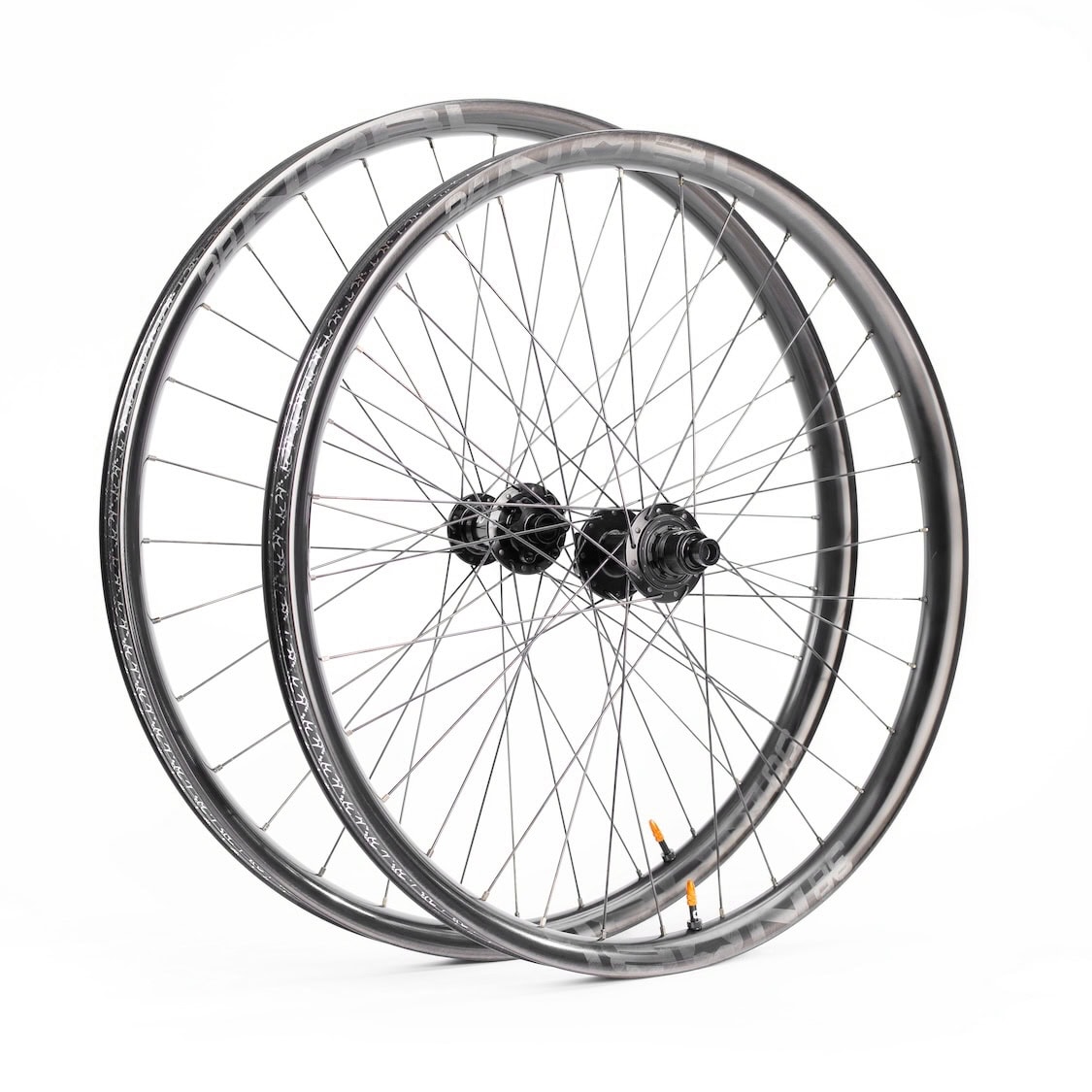
TR38 Mullet rims
29″ front, 27.5″ rear, 32h
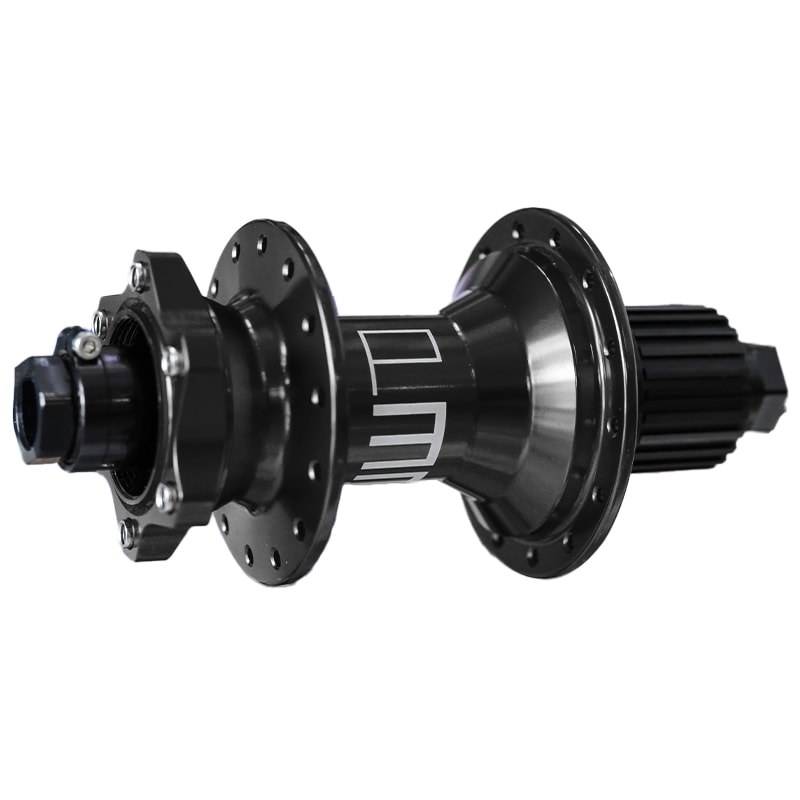
Project 321 G3 mountain hubs
(110x20mm DH boost front, 157x12mm superboost rear)
